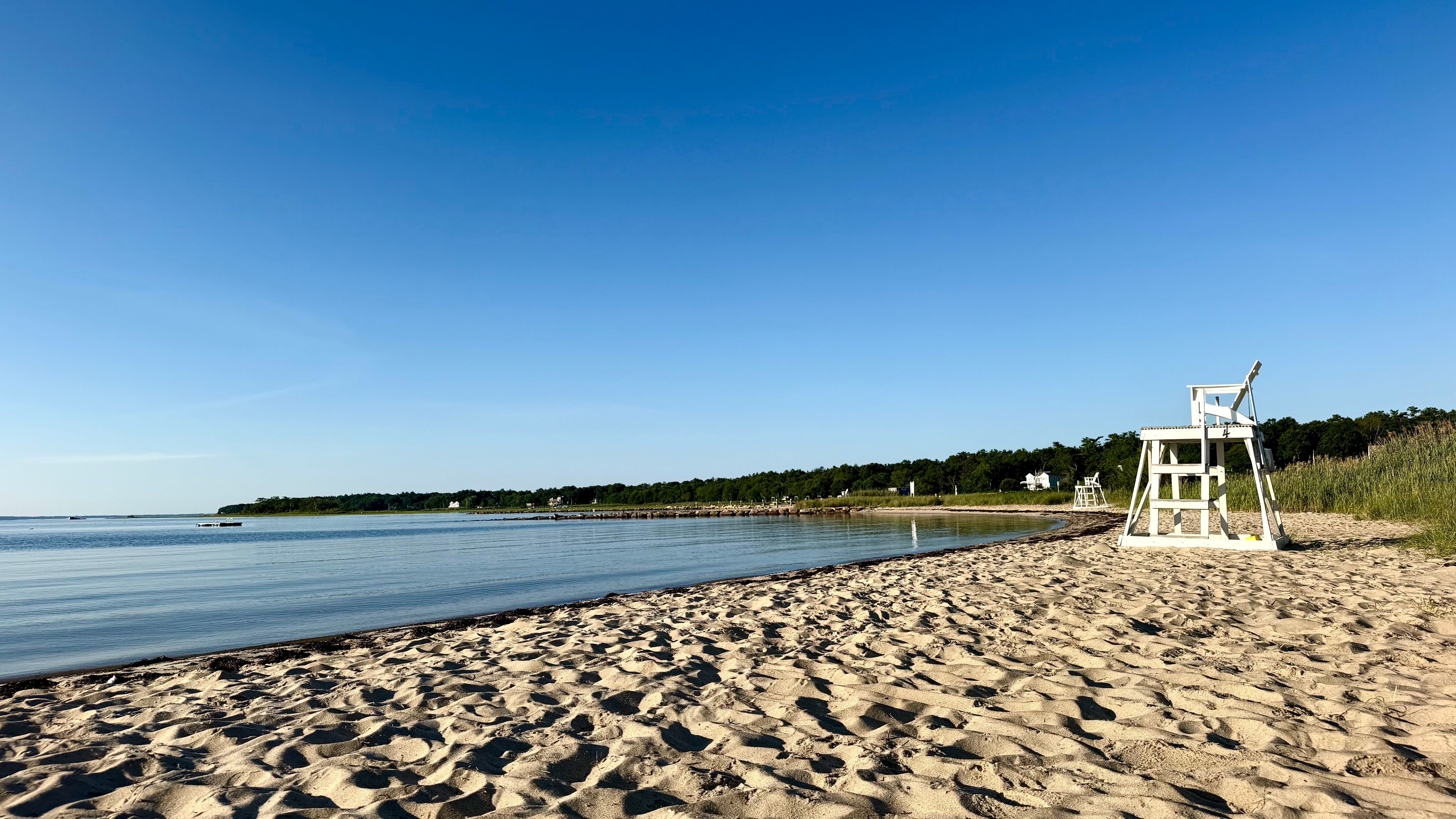
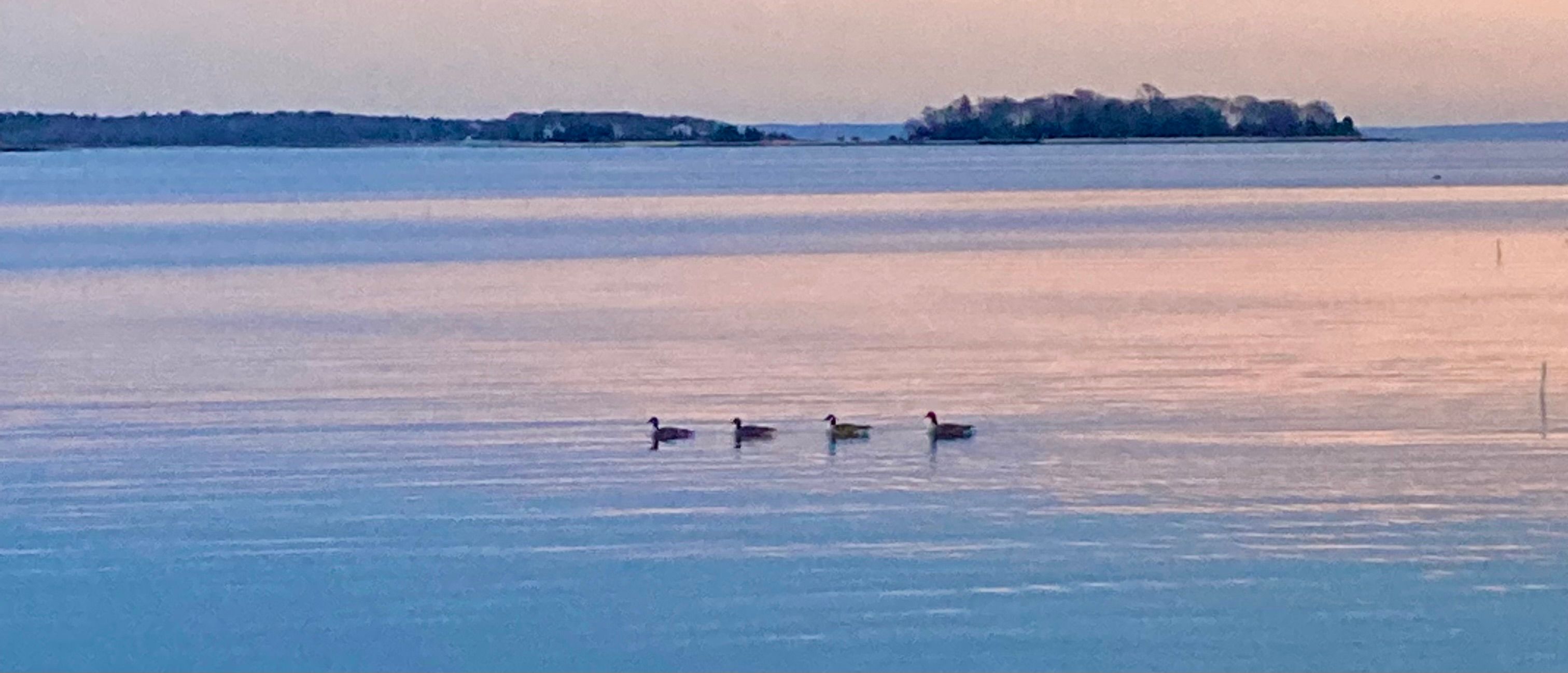
Throughout the day, I sensed the sunset would be stunning, with clouds drifting in from the west and that special golden glow before dusk. My camera was charged, I remembered to put the SD card in, and I kept telling myself these shots would turn out incredible.
I uploaded them that night. Flat. Basic. Generic. WTF.
I was disappointed. But I’d set myself up for it, hadn’t I? I’d shot the sunset in my head hours before I ever pointed the lens at it. I believed a perfect story I was telling myself. I set an unrealistic expectation.
We all do this. We’re human, after all.
Jack Curtis did it too, when the stakes were high. Then he realized, recovered, and succeeded.
His goal this spring was to make it to the FEI U25 Eventing World Championships in Ireland. He did it — and finished 6th out of 40 riders. Jack and his horse, Roo.

Jack Curtis and Roo at the World Championships last weekend
I started working with Jack about a year ago. I didn’t know anything about eventing then. I do now, and I think it’s very cool — three disciplines in one competition. Dressage: exact movements in a flat arena. Cross-country: speed and courage over logs, water, open ground. Show jumping: precision over fences that fall if you barely touch them.
It takes strength, skill, stamina, courage. And it isn’t just Jack. It’s a rider and a horse, acting in unison. That’s what makes it so intriguing.
This year, on top of competing at a high level, he was also finishing college — training in Florida, competing, closing out his degree, all at once. What I admire most isn’t the talent. It’s the discipline. He’s worked hard on the mental side of this sport, and it shows.
Which brings me to last weekend, in Millstreet, Ireland. Jack was ready. Roo was ready. The moment was big. I spoke to him after the first event, dressage. He was disappointed, and he said so: his warm-up hadn’t matched what he’d expected — too short, too many riders in the ring. Because of it, he entered the competition rattled. He finished 22nd out of 40.
As we talked, he realized what happened. And it’s the only reason he could change it. So we talked about “expectation.” About how the mind builds a perfect scenario in advance — a prediction it has no way of guaranteeing. But it feels so good for a while. Until it doesn’t.
Creating an expectation is like planting a mine upstream in your river of thought. I did it with a sunset. Jack did it with a warm-up ring. We do it with people, too — expecting them to act the way we want, when they were always going to be exactly who they are. So we build an expectation of a future moment. Then the moment unfolds as it does, and we find ourselves at war with it; wishing it were unfolding the way we’d expected, not the way it actually is. See the problem here?
It’s probably impossible to live without expectations. They’re close cousins of hope. They help us to be optimistic. The problem isn’t having them. It’s holding them too tight.
Going into cross-country, we talked about riding with no expectations. Nerves, maybe. But no expectations. Just ride. He crushed it. And moved up to twelfth place.
The last event of the weekend was show jumping — a fence that falls if you touch it wrong, in front of everyone. Here we go! He crushed that too. Then he watched the rest of the field come in behind him. And moved to 10th. 8th. 7th. And finally, 6th. LFG!
No amount of will can change how life plays out. I’ve learned that one the hard way.
So we prepare. We train. We adapt. We give ourselves the best shot. We imagine, we hope. Then we let go.
That’s when it happens.
Just ride.
— Pete
Notes arrive on Sundays and some Wednesdays
•
About me, and Practice Notes → here
About Integrative Coaching → here
About my book, The Why of Sports → here