It started as a wiggle. Just a slight shift.
I first noticed it a couple of months ago, lying in bed. When things are quiet and dark, you notice things in your body that you didn’t during the hum of the day. At my age, this is unfortunate. The twitch in the foot, the ache in the hip. The “you shoulda done that” thought. Other stuff . . . But I wasn’t expecting a wiggle in my top front left tooth.
Specifically, it’s my “upper left central incisor.” They call it “#9” at the dentist. My actual #9, though, is long gone.
When I was four, I tripped in preschool and went mouth-first into my desk. It didn’t seem like much at the time, but when the adult tooth eventually came in, it had a brown spot on the bottom corner. I also had a slight gap between my top front teeth. I learned to smile with my mouth closed, maybe smiled less as a result, a habit I’m still trying to break. I actually enjoyed the gap, though, because it let me squirt water through it, which was pretty fun.
#9 first broke when a Roxbury Latin lacrosse player’s stick came up under my helmet when I was a junior in high school. The dentist shaped it with his drill and glued a shiny cap on it. #9 played on. (Note to younger self: wear a mouthguard)
Many years and a few more caps later, while I was eating street corn, what was left of good old #9 broke off at the gum line. It didn’t hurt because I’d had a root canal. No more capping. The endodontist told me there was a good solution—an implant. A permanent solution to this nagging problem. So, several intensely unfun visits and $7,000 later, he screwed a shiny new implant into my upper jawbone. It felt like I could bite through steel. I was pissed that they closed the gap.

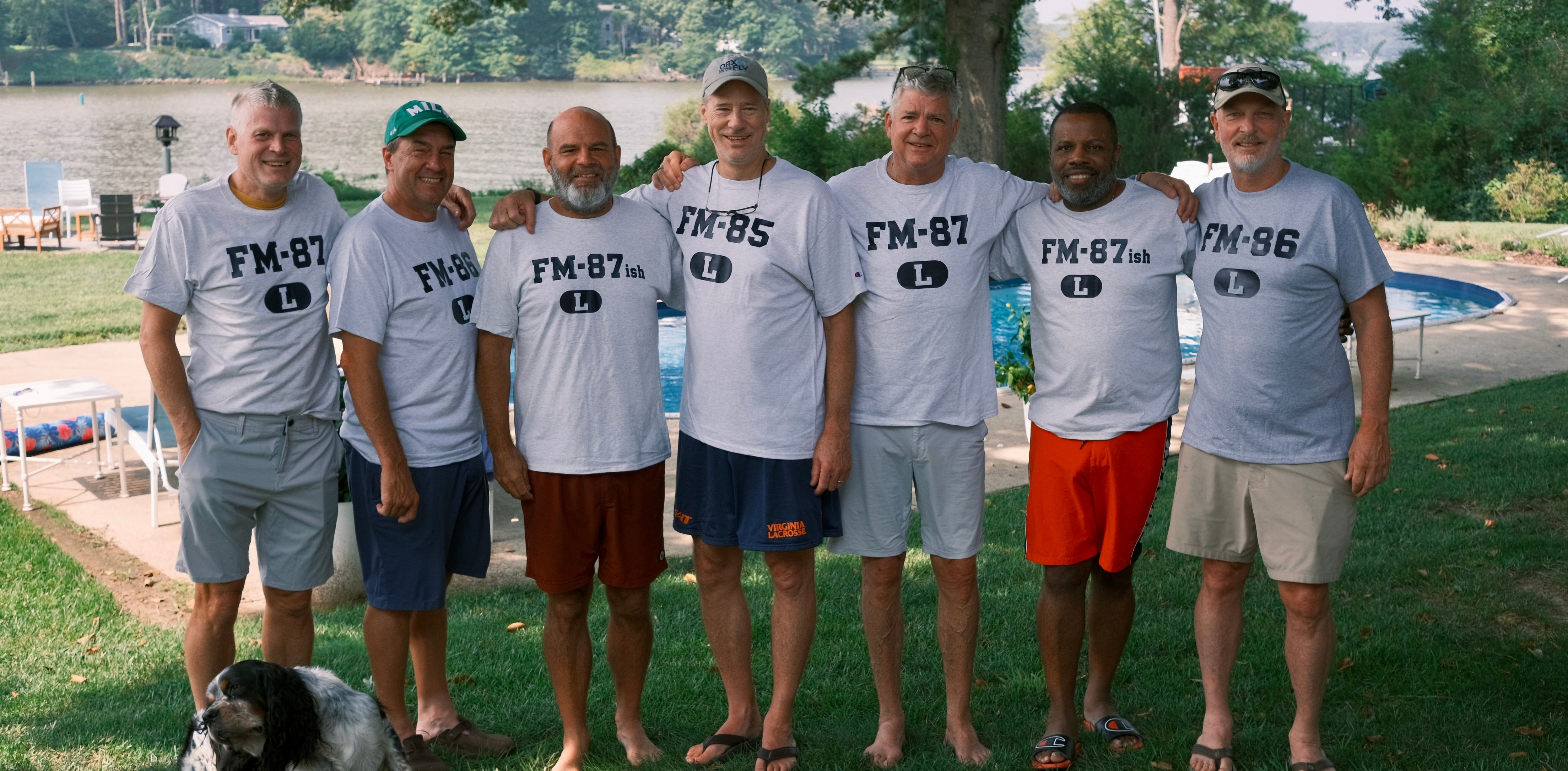
Might be the last remaining pic of the gap
I thought it was permanent.
It lasted seven years.
As a trained mindfulness teacher, I certainly should have known. Nothing is permanent. And I do understand this intellectually. I’m old enough for impermanence to have shown me what it means quite clearly. I’ve learned that lesson in spades.
Have I?
It’s one thing to understand impermanence. Quite another to make peace with it. I can sit quietly, observe my breath, watch thoughts come and go, and contemplate the changing seasons. But when something I love begins to disappear, I still want to hold on. Apparently, knowing something is true doesn’t mean I’ve learned to live with it.
My favorite soft cotton shirt becomes frayed at the collar. I wear it until it falls apart. Holes form in the soles of my favorite shoes. I keep wearing them. My grandfather’s watch has stopped working. Sometimes I wear it anyway. Things that have accompanied me through years of living eventually give way. (Though my ’93 Land Cruiser, at 397,000 miles, might actually be permanent.)
Homes, pets, people, the sponge in my sink. They come, and they go.
And yet, for some reason, we keep expecting things to last. We build our lives around the assumption that tomorrow will look something like today. That the people we love will be there when we wake up. That the things we’ve worked so hard to build will remain standing.
Of course, we know better. But we hope anyway.
So what’s the answer? Is there a skillful move, a wiser way to live with this reality? Or are we stuck fighting the inevitable change that is the very nature of life?
Maybe part of the problem is that we think of impermanence only in terms of loss. Things wear out, break down, and disappear. But change is also what makes life possible. Without it, there would be no spring after winter, no healing after injury, no child growing into adulthood. No new friendships, no unexpected beginnings. No falling in love.
A beautiful sunset is necessarily fleeting. Part of what makes it beautiful is knowing it won’t last. We stop what we’re doing, pay attention—and appreciate.
And the hard times, the pain, the storms in life? They’re fleeting too. Not always as quickly as we’d like. Not always in the way we’d hoped. But nothing stays exactly as it was.
Of course, some losses are different.
A tooth can eventually be replaced. A favorite shirt, a pair of shoes, a sponge. But a person? A beloved dog? There is no replacement. Only the space they occupied, the memories they left—the walks, the talks, and how they helped to show us ourselves in the process.
And here’s the thing . . . We know how this works. We know that when we bring a puppy home, we’ll have to say goodbye someday. We know that when we fall in love, nothing guarantees us “forever,” whatever that is. We know that every beautiful thing we hold will eventually change, and some of it will disappear altogether.
I thought about this yesterday while walking my dog through the fallen leaves. Leaves that were beautiful even as they were dying. They crunched under our feet.
And still, we love.
We bring the puppy home. We fall in love. We raise children, make friends, plant gardens, build lives together. We open ourselves to joy, knowing that in doing so we make ourselves vulnerable to sorrow.
Maybe that’s the choice we get to make? We can turn away from the uncertainty, try to protect ourselves from what we know will eventually come. We can fight it even. Or we can turn toward it. We can open ourselves to the whole experience, knowing joy and sorrow are part of the same thing we signed up for.
To love what is inherently fleeting. To give ourselves fully, without guarantees. To cherish what has been, while remaining fully present for what is.
It took me a long time to learn that this is courage. Real courage. Less about toughness, more about tenderness.
And in befriending the uncertainty, you befriend yourself too. And things ease up.
That takes guts.
The tooth will get fixed, one way or another. I’ll grumble about the appointments and the bill. (#9 is averaging about $1,000/year over the last decade, btw.) And someday, whatever replaces it will give way too.
What has mattered most in my life was never permanent to begin with. And perhaps that made it all the more precious. Because it was here. Because I was here to experience it. Because, for a while, we got to share this life together.
What else really matters?
— Pete
Notes arrive whenever the spirit moves me these days
•
About me, and Practice Notes → here
About Integrative Coaching → here
About my book, The Why of Sports → here